RTO (Regenerative Thermal Oxidizer)
It works by oxidizing organic compounds (VOCs) in the exhaust gas to carbon dioxide and water at
high temperatures,thereby purifying the gas and recovering the heat released by its decomposition,the
decomposition efficiency of three-compartment RTO exhaust gas is over 99%,and the heat recovery
efficiency is over 95%.
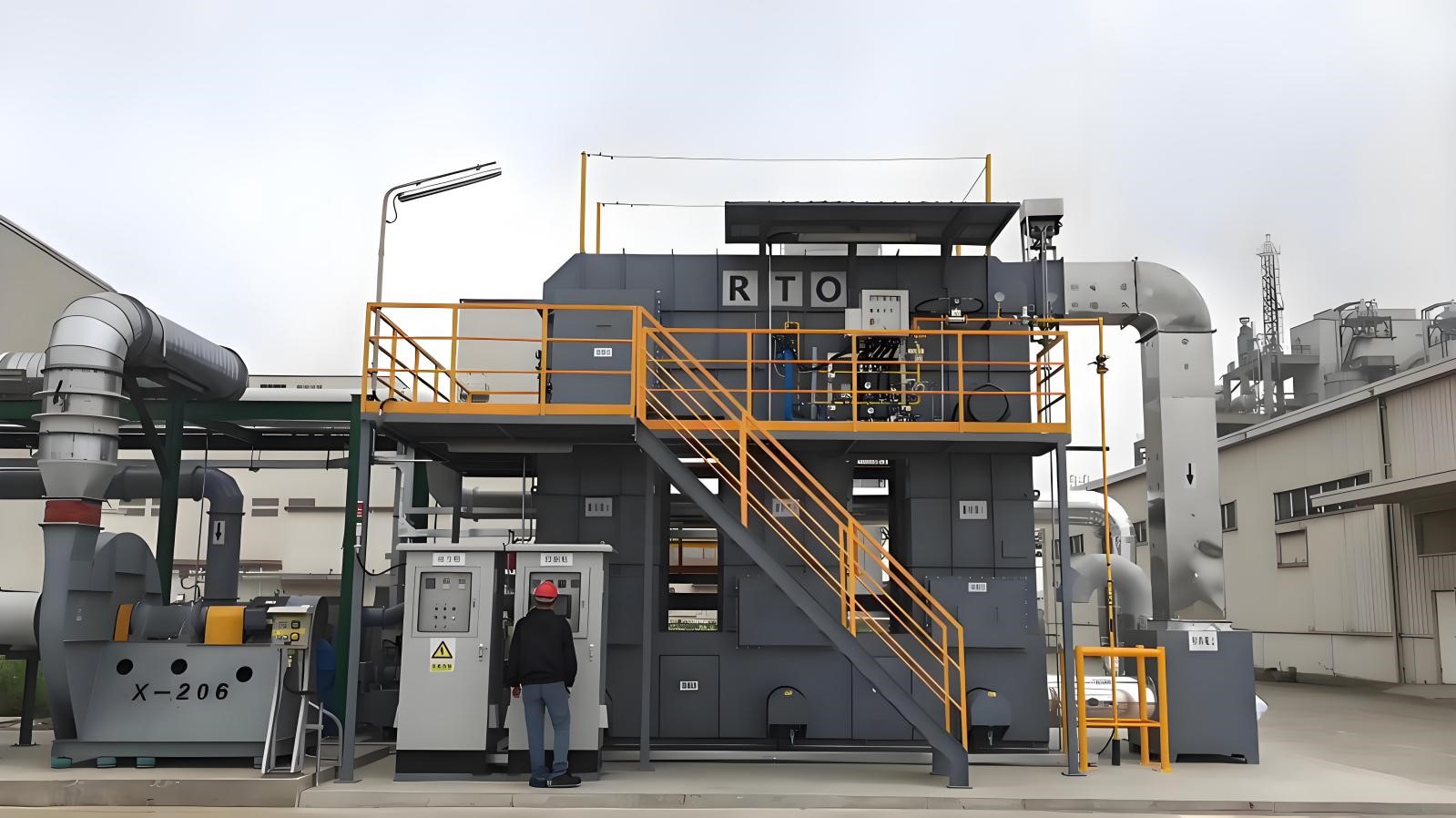
The main structure of RTO is composed of a combustion chamber, a regenerator and a switching valve.
According to the actual needs of customers,choose different ways of heat recovery and switch valve.
The principle of RTO waste gas treatment technology mainly involves two aspects:
high temperature oxidation decomposition and heat energy recovery.
The following is our detailed description of RTO waste gas treatment principles:
1、Oxidation decomposition at high temperature
RTO uses high temperatures (typically 730-780 ° C, or up to about 800 ° C) to oxidize and decompose
harmful substances in organic waste gases into harmless carbon dioxide (CO2) and water (H2O) .
This process, also known as“Pyrolysis”or“Incineration,”is a core step in RTO technology.
1-2 Catalyst Action
In some RTO systems, catalysts may be used to accelerate the oxidative decomposition reaction,reducing
the reaction temperature and increasing the reaction rate.
The use of catalysts can make the organic matter in the exhaust gas more fully oxidation decomposition.
Due to high temperature and possible catalysis,the RTO system can ensure that the organic matter in the
exhaust gas is completely oxidized and decomposed without secondary pollution.
2、Heat recovery
2-1Principle Overview
In an RTO system, a large amount of heat energy is released when high-temperature exhaust gas
flows through a heat exchange medium such as a ceramic regenerator.
This heat is absorbed and stored by the Regenerator, which is used to warm up the organic waste gases
that subsequently enter the system.
This heat recovery mechanism enables RTO systems to use energy efficiently and reduce operating costs.
The recovered heat energy can not only preheat waste gas, but also can be converted into steam or hot
water forms of energy for heating or other needs of industrial production.
The secondary utilization of this energy further improves the economy and environmental protection of RTO system.
3.RTO waste gas treatment process
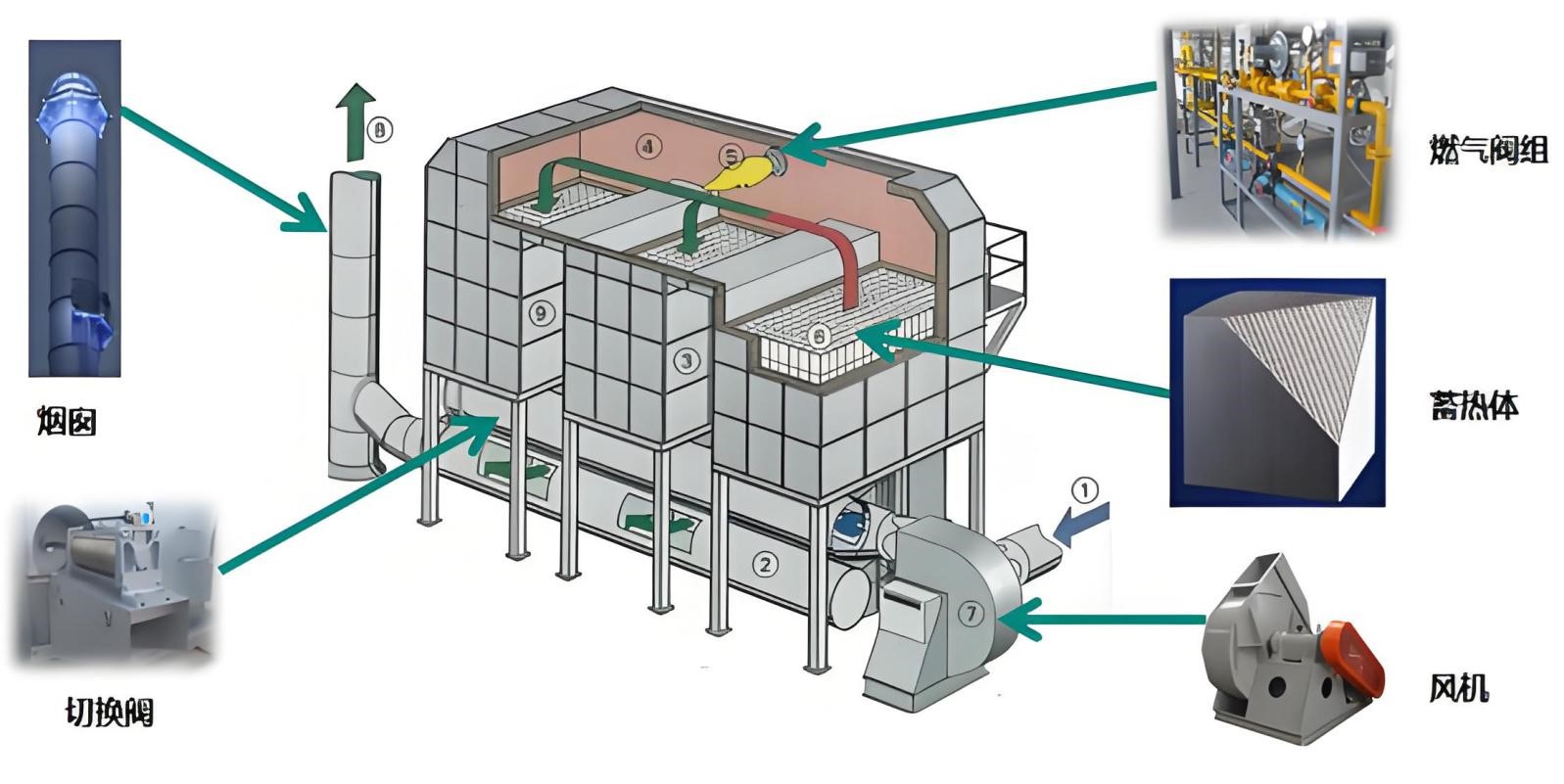
The process of RTO waste gas treatment mainly includes the following steps:
3-1、Exhaust gas pre-treatment
To remove the particulate matter, water vapor and harmful gas impurities in the exhaust gas,to ensure
that the exhaust gas into the RTO system to meet the requirements.
3-2、Preheating
The use of recycled heat or external heat sources to preheat the exhaust gas to the high temperature
required for the reaction.
3-3、Oxidative decomposition
At high temperatures and possibly in the presence of a catalyst,organic matter in the exhaust gas is
oxidized to decompose into carbon dioxide and water.
3-4、Heat recovery
High-temperature waste gas through the heat exchange medium such as the regenerator release
heat energy,heat energy is recovered and used to preheat the subsequent exhaust gas.
3-5、Emission treatment
After oxidation and thermal energy recovery of the waste gas need to be further purification treatment
(such as defogging, adsorption, etc.)to ensure that it meets the environmental emission standards and
released into the atmosphere.
4.Widely used in
4-1、Organic waste gas from painting and painting workshops in automobile, shipbuilding, motorcycle,
bicycle, household appliances, piano, container and other industries;
4-2、Organic emissions from semiconductor manufacturing, LCD manufacturing, shoe viscose,metal can printing,
plastic injection molding, ink exhaust, printing plant, cable and enameled wire manufacturing processes.
4-3、The use of organic waste gas types: alkanes, olefins, alcohols, ketones, ethers, esters, aromatic hydrocarbons,
benzene and other hydrocarbon organic waste gas.
4-4、Low concentration of organic matter (while meeting less than 25% LFL) , high air flow.
4-5、The exhaust gas contains a variety of organic components, or organic components often change.
4-6、Fumes containing substances that can degrade Catalyst poisoning or activity.
 The organic waste gas produced in the painting
workshop of the automobile manufacturing industry
The organic waste gas produced in the painting
workshop of the automobile manufacturing industry